Run the local RADIUS server in a container
In this topic, you will learn how to deploy the Portnox™ Cloud local RADIUS server using Docker containers.
For information about how the Cloud RADIUS servers work, see the following topic: How do RADIUS servers work in Portnox Cloud?.
-
In the Cloud portal top menu, click on the Settings option.

-
In the Cloud portal left-hand side menu, click on the option.
- Optional:
Under the Local RADIUS images heading, click on the Docker image link to
open a new browser tab with the Docker Hub page for the portnox/portnox-radius Docker
image.

Keep this browser tab open. It may be useful when you configure the Docker image later.
-
Scroll down to the Local RADIUS instance section and on the bottom of this section, click on the
Add new RADIUS profile (Docker) link.

-
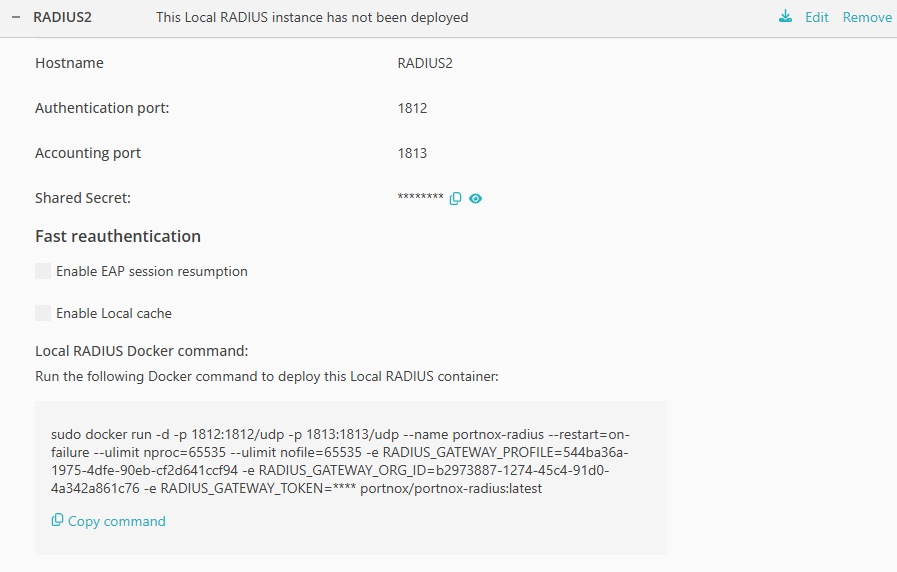
In the Hostname field, enter a name for your local RADIUS server.

This name is used as the hostname that your NAS devices will use to contact the local RADIUS server. However, using the IP address in NAS configuration is recommended. You will find the IP address later, in the cloud platform that you will use to run the Docker image. You can also choose a local network address if you run the Docker image on-premises.
-
Click on the ⧉ icon next to the Shared Secret field to
copy the shared secret and paste it into a temporary text file. You will need to use this shared secret when configuring
NAS devices to contact this local RADIUS server.

If you want to generate a different shared secret, click on the Regenerate link under the field.
-
Click on the Save button to save the configuration.

-
Click on the row that represents the newly added RADIUS server to display more information.