
Onboard a ChromeOS device through self-onboarding
In this topic, you will learn how to onboard using the self-onboarding portal, a ChromeOS device such as a Chromebook, and a wireless network managed by Portnox™ Cloud.
Authenticate with the self-onboarding portal
In this section, you will learn how to authenticate with the self-onboarding portal using your corporate identity.
-
Click on one of the available buttons representing authentication repositories. Then, complete the login process as
required by your authentication repository.
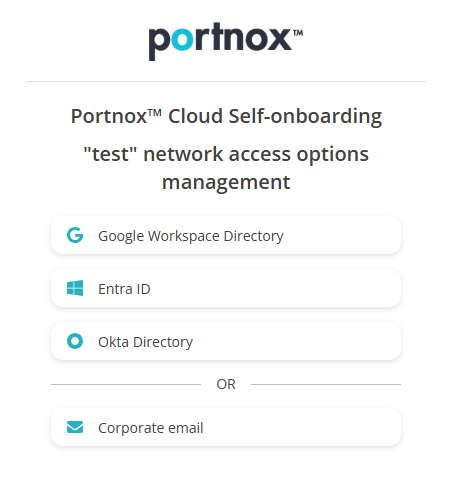 Note:The buttons available on this page will depend on the authentication repositories integrated with your Portnox Cloud. It is very likely that your organization will only use one of them. The Corporate email option is available only if you configured the self-onboarding portal to allow end-users to use and create Portnox accounts using the self-onboarding portal.
Get and import the certificate
In this section, you will learn how to get the certificate issued by Portnox Cloud for your ChromeOS device and how to import it into Chrome.
-
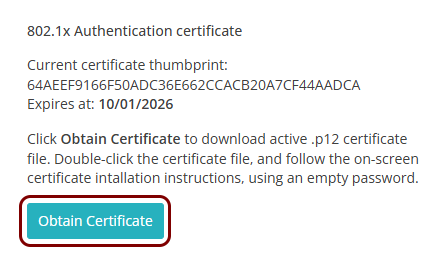
Click on the Obtain Certificate button to download the certificate.
-
Install the certificate in Chrome:
-
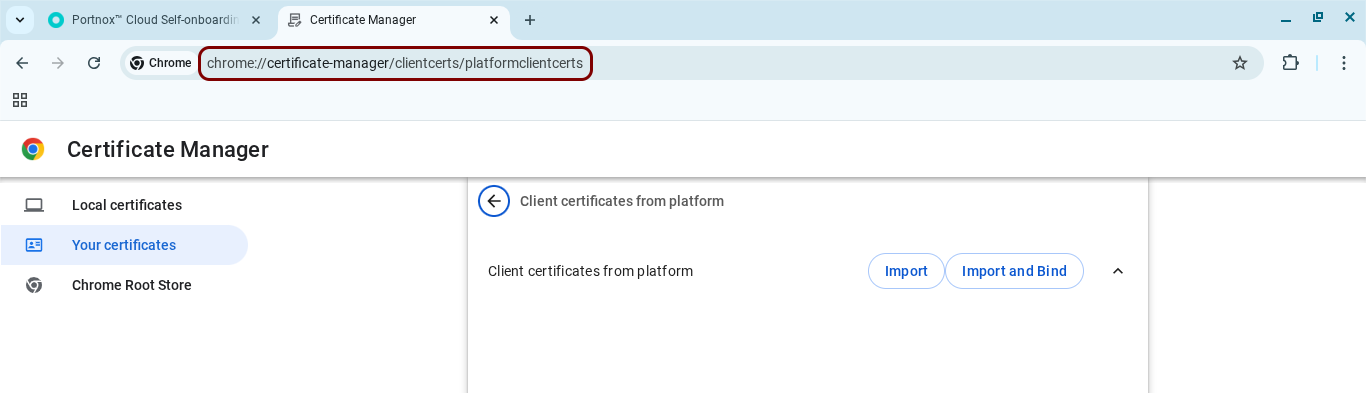
Open a new tab in Chrome, and type the following URL:
chrome://certificate-manager/clientcerts/platformclientcerts.
Note:You can also copy this URL from the self-onboarding tab by clicking on the ⧉ icon next to the URL, and then you can paste it in the address bar of the new browser tab.
-
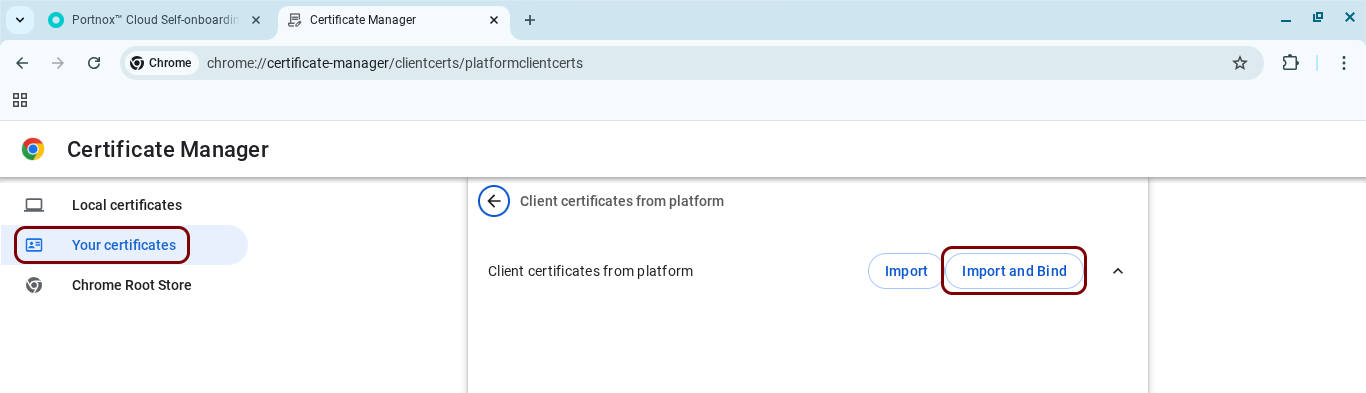
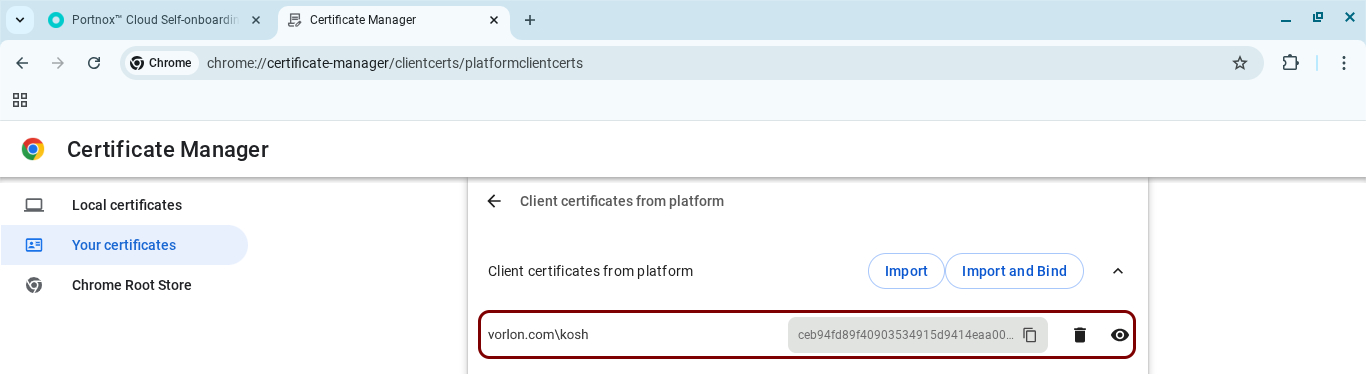
In the left-hand side menu, select the Your certificates option, and in the
right-hand side pane, click on the Import and Bind button.
-
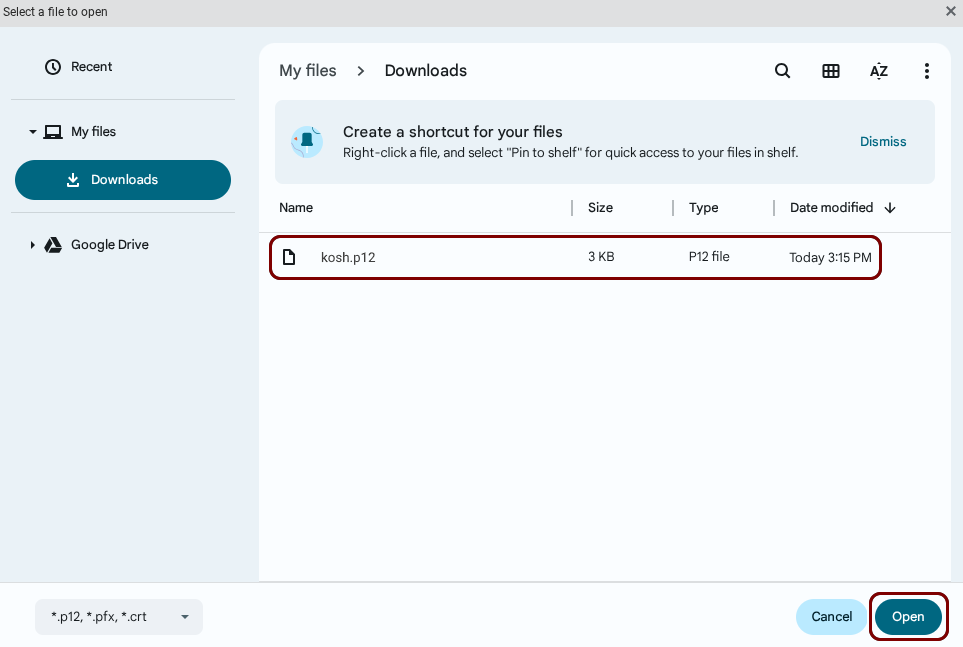
In the Select a file to open window, select the downloaded certificate file, and then
click on the Open button.
-
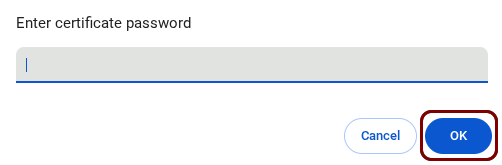
In the Enter certificate password window, do not enter any password, and click on the
OK button.
Result: You will see the imported certificate on the list.
-
Open a new tab in Chrome, and type the following URL:
chrome://certificate-manager/clientcerts/platformclientcerts.
Configure the wireless network adapter
In this section, you will learn how to use the self-onboarding portal to automatically configure the wireless network adapter (Wi-Fi) on your ChromeOS device.
-
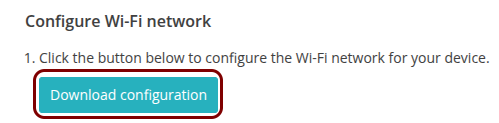
Click on the Download configuration button.
-
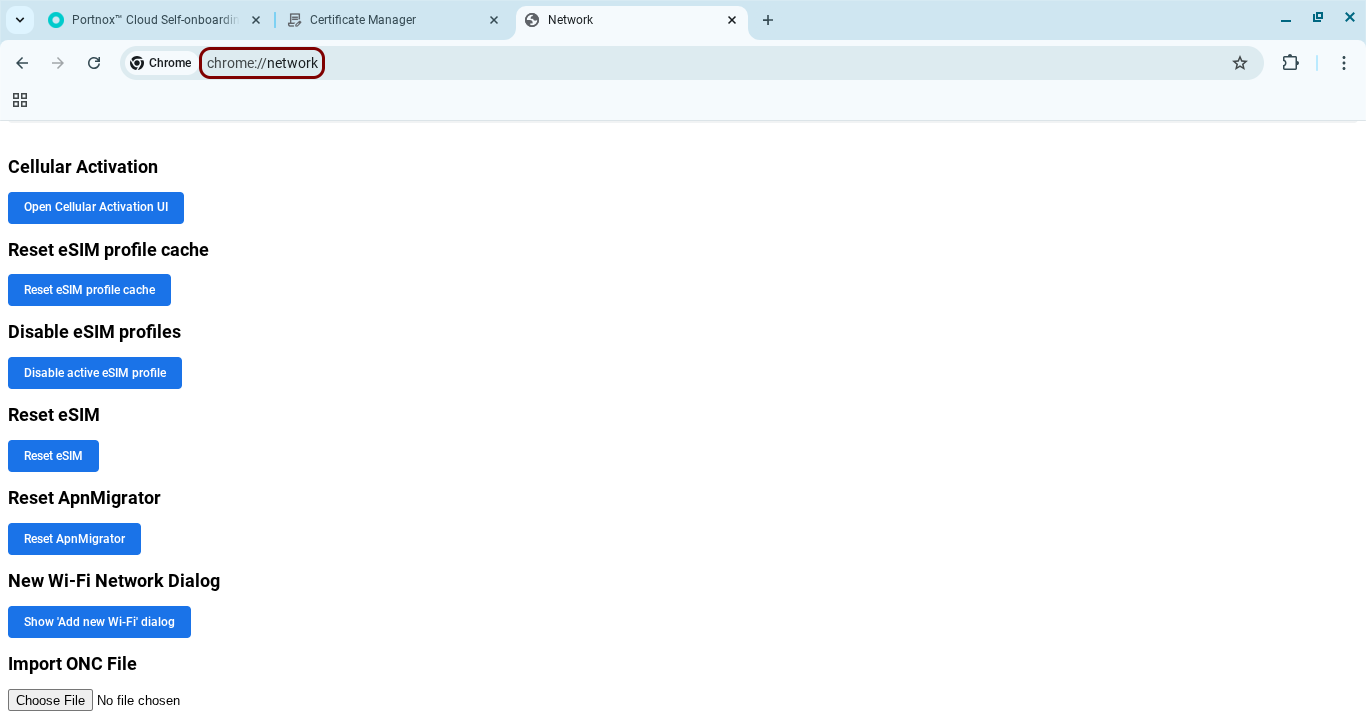
Open a new tab in Chrome, and type the following URL: chrome://network.
Note:You can also copy this URL from the self-onboarding tab by clicking on the ⧉ icon next to the URL, and then you can paste it in the address bar of the new browser tab.
-
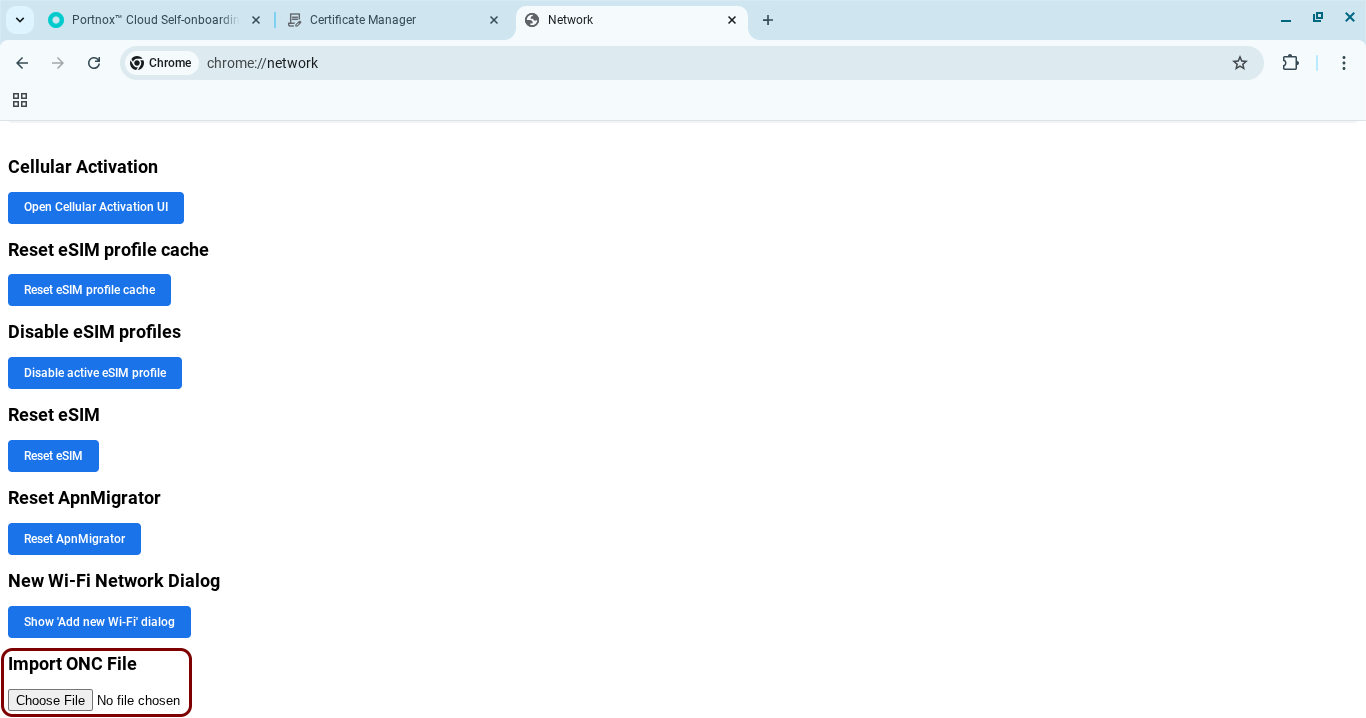
Scroll the page all the way down, and in the Import ONC File section, click on the
Choose File button.
-
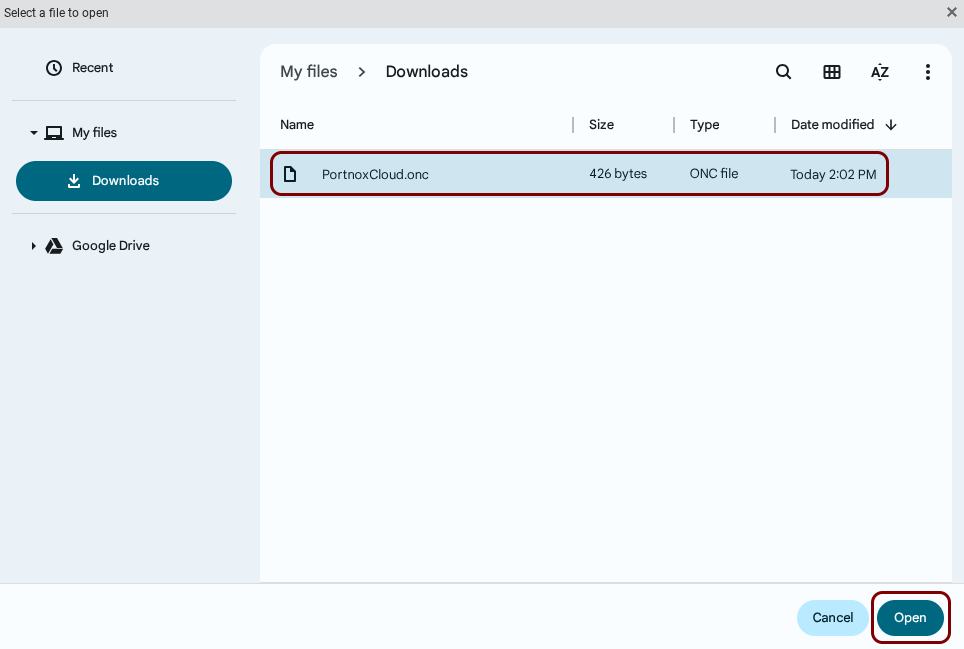
In the Select a file to open window, select the downloaded certificate file, and then click on
the Open button.
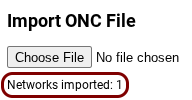
Result: You will see the message: Networks imported: 1 below the Choose file button.
Reissue a certificate before it expires
In this section, you will learn how to issue a new certificate if your current certificate is about to expire, and what steps you need to do after you reissue the certificate to remain connected to the network.
When you reissue the certificate, the old certificate is revoked, which means it becomes invalid even if it has not yet expired. If you just reissue the certificate but you do not reconfigure the Chromebook, you will lose access to the network even before the old certificate expires.
-
Click on the Reissue certificate button.
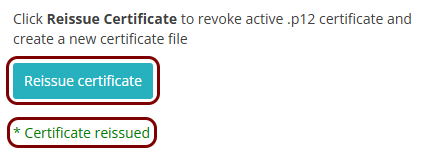
When the process finishes, you will see the information: * Certificate reissued.